Monday, 16 January 2012

Preliminary Lessons from the 'Costa Concordia' shipwreck


Davos (CH), 16 January 2012. The Costa Concordia shipwreck offers some interesting observations about risk and its effect upon disaster and about evacuation. First, let us examine the question of what happened.

The Costa Concordia is a Concordia Class ship of 114,500 gross tonnage, 51,387 tonnes displacement. It was built in 2005 at Sestri Ponente, Liguria, Italy, and completed its maiden voyage in June 2006. It is owned by the UK-US company Carnival Corporation plc, the world's largest cruise ship operator. The ship was commanded by Captain Francesco Schettino, who joined Costa Cruises in 2002 and was made captain in 2006.


In the evening of Friday 13 January 2012 the Costa Concordia deviated from its regular programmed route through the Tyrrhenian Sea in order to make a close approach to Giglio, an island in the Tuscan Archipelago close to the Argentario Peninsula. Giglio is 23.8 sq. km in size, has a population of 1,458 and is economically dependent on fishing and tourism. The Costa Concordia had carried out a similar manoeuvre in August 2011, which led some people on the island to comment that it was dangerously close.


The alteration of course was not approved by the operating company and involved cancelling alarms and part of a pre-programmed route. At about 21.40 hrs CET while about 150 m from the coast of Giglio the ship struck a rock, which tore a rift about 70 m long and up to 48.8 m wide in port side of its hull (the Costa Concordia is 290.2 m in length). This caused the ship to decelerate rapidly from 15 to six knots and created a pronounced list as compartments below the waterline flooded. The ship then beached on a coastal shelf 37 m deep and less than 100 m from the coast. It was inclined at 60-70 degrees and about half-submerged.


There were 4,229 people on board, of whom about 1,000 were personnel from the multinational crew. The rest were passengers from different countries. They were evacuated over a period of less than two hours, mostly by life-raft but in a few cases by swimming ashore (and thus risking hypothermia). At the time of writing this, six bodies have been recovered and 24 passengers and four crew members are still missing, which amounts to a potential mortality of 0.5%. Sixty-four people were injured, mainly through broken limbs, cuts and abrasions and exposure or mild hypothermia.


The captain and first officer were detained by the police with the possibility that they would be indicted for manslaughter. At the time of writing efforts are underway to remove 2,380 tonnes of fuel oil from 17 double-hulled tanks and four other containers. If the oil escapes, serious damage could be done to sea-floor ecology in the vicinity of a marine reserve. Early indications are that the ship may be declared a constructive total loss, with a cost of about $500 million, and that Carnival Corporation will suffer a loss of earnings of $85-95 million in the current financial year, including the effect of the drop in value of its shares. Nevertheless, as I write negotiations are underway to conduct salvage and reflotation.


The following preliminary observations can be made on the basis of the incomplete evidence that is publicly available at the time of writing, less than three days after the event.

Risk taking. It appears that the unauthorised approach to Giglio involved substantial risk to the safety of the ship, and probably more risk than was in any way acceptable. One wonders what procedural mechanisms existed in the company to limit or avoid such risks? The technical mechanisms appeared to have been satisfactory but could be overridden. It is as well to remember that an interview with Captain Smith of the Titanic, shortly before its last voyage, recorded him as saying that his career had been distinguished by how uneventful it had been. Maritime risk is not a continuum but a spiky phenomenon, and one that can harbour great surprises (if I may be forgiven an instant of inadvertent levity).
 
Alarm. The first sign of problems involved a "boom and groan" noise and a substantial jolt as the ship rapidly decelerated, which also toppled or threw objects around on board. Apparently, passengers did not raise the alarm by calling external authorities for about an hour. In the meantime they were advised that there had been an electrical fault. Quite probably, passengers and crew experienced normalcy bias, the desire to believe the least threatening hypothesis. In some respects, the situation was analogous to that of the MS Estonia, which sank in the Baltic Sea in 1994 with the loss of 851 lives, 85 per cent of those on board. Over a 45-minute period, the Estonia listed 30-40 degrees before listing 90 degrees, which made evacuation from lower decks impossible. Listing was rather less on the Costa Concordia, but it nevertheless complicated movement aboard the ship. The first advice to passengers appears to have been to go to their cabins. This highlights the management difficulties experienced in the 'hiatus period' when managers do not have enough information to determine a reliable strategy and thus tend to require passive behaviour from those people they have to manage.

Evacuation. Comprehensive training meant that procedures were clear. However, despite drills, passengers had no experience of evacuation and some underestimated the risk and behaved inappropriately. A degree of chaos is inevitable in such conditions as listing complicates the launch of life rafts. Unlike the Titanic, which was grossly undersupplied with lifeboats, the Costa Concordia had some redundancy in its life raft accommodation. Nevertheless, it is difficult to launch 150-170 people into the sea from a severely listing ship. An amateur video shot by one of the evacuees was widely circulated in the mass media with the title "Lifeboat panic caught on film." However, when one watches the video clip, it tends to show the opposite, and thus confirm the absence of panic rather than its prevalence, as in so many previous disasters. Nevertheless, as fear of entrapment is one of the principal causes of panic, the conditions were ripe for it to break out, as it did on the Estonia when listing became chronic and movement was inhibited. An element of luck intervened: the ship beached on a coastal shelf in calm weather. In stormier conditions it could have slid into deeper water and sunk completely without the opportunity to evacuate almost all people on board. In valediction, there does not appear to be evidence of discriminatory evacuation which might have put vulnerable people at risk, even though at least two of the dead were senior citizens of advanced age.

Management of the aftermath. Costa Cruises appears to have adopted a standard business continuity crisis management approach based on comprehensive communication. The company distanced itself from the decision-making process that led to the disaster. It will require substantial resources in order to deal with claims: millions of euros of money and assets were abandoned aboard. There is thus a need for a system rather like the one developed by SAS Airlines and promoted by IATA for dealing with the administrative needs after an air crash—but on a larger scale.

Shore-based civil protection and coastguard forces appear to have acted well, although as in many such cases it took vital time for the enormity of the situation to be appreciated in full. The management reliance on the Prefecture of Grosseto (the province in which the disaster occurred) confirms the persistence of the 1990s model of civil protection in Italy, despite the reforms intended in the Bassanini decree-law of 1998, articles 107 and 108 of which shifted the balance of power to the regions.

Media response. Early reports reflected some of the uncertainties garnered from a mass of differing perceptions of the event. Whether the crew acted efficiently in the evacuation or not, whether the alarm was sounded in the right manner or not, whether there was panic and how much danger was involved in reaching the shore, and whether the captain abandoned ship before some of the passengers and crew are all examples of matters that were not reported reliably, perhaps with some reason. Despite the purveyance of conflicting information, the reporting was relatively free of the usual distortions. This may have been because the end result of the disaster was much less severe than it could have been if the ship had, for example, sunk in deeper water. Hence, the pervasive desire to blame was muted in this case. Human error undoubtedly played a part, negligence may have been a factor, but there was no great desire to accuse. There might have been in a more severe disaster, and in that case accusations would undoubtedly have been launched more freely. Nonetheless, the media's incessant emphasis on 'human interest' stories provided an unbalanced overview of the difficulties of evacuation, much skewed towards the extreme conditions related by a minority of people who had a relatively hard time.

Conclusion. No doubt other lessons will emerge, and these lessons will be qualified by new information. In the meantime, in one respect the Costa Concordia disaster reminds one of the Buncefield oil storage depot explosion and fire in Hertfordshire, England in 2005: out of the most tranquil situation, where routine conditions have prevailed since anyone can remember, can be born an extraordinary scenario, and perhaps an apocalyptic one. This is what 'disaster risk' can mean.

Addition 20-1-2012. Information subsequently released has tended to confirm the hypothesis of human error that overrode technical protection mechanisms and automated systems. Besides the implication of negligence, three aspects of this disaster remain particularly strinking. The first is the procedural failures regarding evacuation. Passengers (by then wearing lifejackets) were initially advised to return to their cabins. This could have led to high mortality if the ship had sunk in deep water. Moreover, opportunities to abandon ship before it started listing were wasted. Secondly, many other instances have come to light of large cruise liners, including the Costa Concordia herself, coming unacceptably close to Italian coasts. It is notable that legislation has to be enacted (by emergency decree) rather than relying on the cruise operators to excercise normal prudence and caution. Thirdly, statements made public by numerous protagonists, from ships cooks to managing directors, have been so contradictory that it is clear that the truth about this incident is in short supply.

Monday, 19 December 2011

The Costs of Relief in International Disasters


Does rescue and medical intervention in foreign disasters cost too much? Is it effective and efficient? It is remarkable how little debate there is about these questions and how few data are available on which to base one's judgements.

In assessing costs, it is necessary to distinguish between search and rescue (SAR) and urban search and rescue (USAR). The former includes mountain and sea rescue, lost climbers, search for lost children and Alzheimer's patients and is usually focussed on one or two individuals, or a single boat. USAR involves searching damaged buildings after earthquakes, explosions and structural collapses.


SAR costs are highly variable. The cost of using helicopters depends on the type and availability of the aircraft, its range and crewing requirements (from a single pilot to a full medical team, copilot and winchman). In general it is around €2,500 per hour of search.


International USAR may involve travel over very long distances (for example from Taiwan to Haiti). It may also involve one or two teams of 58 members, up to 28 tonnes of equipment, and possibly also two or three rescue dogs (FEMA 1996). USAR teams inscribed in the UN register INSARAG are required to maintain 72 hours' total autonomy wherever they work, which necessitates bringing food and water supplies with them. However, it is very difficult to be autonomous with regard to local transportation in a foreign country
.

In the USA a USAR team costs about $1.8-$2.2 million per year to maintain. For accredited teams, the US Federal Government contributes about $1 million per task force per year, a total of $28 million. Although in 20 years the cost to US taxpayers went up seven times, they have fallen back recently (Bea 2010, p. 1).


The number of foreign rescuers that arrive in a disaster area after a major, internationally declared catastrophe usually varies from 1,200 to about 2,300, with a mean somewhere around 1,600. Almost no one arrives within the first 24-36 hours and almost all usually arrive within 72 hours. On occasion delays have been experienced by failure to get through immigration and quarantine, or by lack of transport on the ground. The teams usually stay for 4-7 days.


The "golden period" for rescuing trapped survivors is 6-12 hours after a sudden impact disaster that causes buildings to collapse (and definitely well within the first 24 hours). However, most foreign rescuers arrive later than this, and the number of people rescued is usually very small. The teams are thus restricted to recovering bodies from the rubble. In Bam the 57 members of Rapid-UK rescued no one at all. In Haiti, 134 people were rescued (bearing in mind that the death toll was probably in excess of 250,000 and no one ever counted the plethora of injured people). Of these 134 people only nine were rescued after the fourth day. Yet the EU alone mobilised 12 USAR teams, and at least 24 others arrived from different countries in Europe, Asia and the Americas. Whilst one is of course grateful that anyone was rescued, one is forced to conclude that overwhelming inputs thus produced very small results. Similarly, 40 USAR teams participated in the response to the Bam, Iran, earthquake of 2003, but only five of them arrived within the first 24 hours (Abolghasemi et al. 2006).


The maximum survival time for an uninjured person trapped under rubble is 14-15 days, but the proportion of people who last more than five days is absolutely insignificant. In the Tanghsan, China, earthquake of 1976, the worst such disaster in the 20th century, 5,500 people were rescued on the first day, but by the fifth day there were only 34 new survivors.


The cost of sending teams across the globe and putting them to work for a week is seldom, if ever, quoted. Rumour has it that the cost per life saved is about US$1 million, although accurate estimates have, to my knowledge, never been made. Clearly, if all search and rescue could be conducted by well-equipped, numerous, well trained local forces, then costs would be very much smaller. However, it is as well to remember that in the response to the 1985 Mexico City earthquake, 135 rescuers died, 65 of them when searching confined spaces that flooded (Casper and Murphy 2003, p. 367). Safety training and personal protective equipment are thus absolutely necessary. In Mexico City, as elsewhere, four fifths of survivors were rescued within one day of the disaster (Olson and Olson 1987).


A second problem concerns foreign field hospitals (FFHs). In the aftermath of the Bam earthquake, the estimated cost of deploying 14 foreign field hospitals for an average of two months each was $12 million, or about 40 per cent of the cost of rebuilding Bam's two damaged and unserviceable hospitals. Deployment was more rapid than it had been in the Gujarat earthquake two years previously (24-48 hours as against 5-7 days), but nevertheless, by the time the first field hospitals were active, injured patients had either died or been airlifted by medivac to other cities. The field hospitals were used to provide routine medical care in substitution for the damaged permanent medical structures. Hence, it is hardly surprising that when Von Schreeb et al (2008) looked at four major mass-casualty disasters, they found evidence of substantial over-supply of medical aid and rates of utilisation of field hospitals that fell below 50 per cent. In the final analysis, the logistical costs of deploying field hospitals may be so high that they are sometimes left behind at the end of operations and donated to the host country--i.e. written off.


The upshot of these considerations about USAR and FFHs is that there is no substitute for resilient, local rescue and medical response to disasters. The costs of foreign intervention are very high, the benefits are small and from this point of view the international relief system is extremely inefficient.


References


Abolghasemi, H., M.H. Radfar, M. Khatami, M. S. Nia, A. Amid and S.M. Briggs 2006. International medical response to a natural disaster: lessons learned from the Bam earthquake experience. Prehospital and Disaster Medicine 21(3): 141-148.


Bea, K. 2010. Urban Search and Rescue Task Forces: Facts and Issues. Congressional Research Service, Washington, DC, 41 pp.


Casper, J. and R.R. Murphy 2003. 2003. Human–robot interactions during the robot-assisted urban search and rescue response at the World Trade Center. IEEE Transactions on Systems, Man, and Cybernetics. Part B: Cybernetics 33(3): 367-385.


FEMA 1996. Technical Rescue Program Development Manual. FA-159. US Federal Emergency Management Agency, Washington, DC, 252 pp.


Olson, R.S. and R.A. Olson 1987. Urban heavy rescue. Earthquake Spectra 3(4): 645-658.


Von Schreeb, J., L. Riddez, H. Samnegσrd, H. Rosling and C. de Ville de Goyet 2008. Foreign field hospitals in the recent sudden-impact disasters in Iran, Haiti, Indonesia, and Pakistan. Prehospital and Disaster Medicine 23(2): 144-153.

Monday, 21 November 2011

Learning Lessons from Crises and Disasters

Lessons Learned?

The Oxford English Dictionary defines learning as the acquisition of "knowledge of skill ... through study or experience or by being taught". In defining 'lesson' it distinguishes between "a thing learned" and "a thing that serves as a warning or encouragement". The concept of 'lessons learned' is widely used in disaster risk reduction, a field that offers many opportunities to learn from practical experience and theoretical study. The term has been used in a variety of different contexts, which can be given the following summary classification:-

  • General lessons from major events, particularly large disasters of international importance. Hurricane Katrina, which struck the Gulf of Mexico states in August 2005, led to a significant number of studies that collected observations on how to improve resilience in the affected area (e.g. White 2007).
  • Specific lessons from major events, usually derived by concentrating on particular sectors or disciplines, such as the engineering response to building failure, or the response to disaster of psychologists (e.g. Schumacher et al. 2006).
  • Lessons obtained as a result of monitoring the practice and outcomes of drills and exercises, particularly those designed to test multi-agency response to incidents and disasters (e.g. Beedasy and Ramloll 2010; Fitzgerald et al. 2003).
  • Lessons derived over time from cumulative experience of particular phenomena, practices or problems, such hospital response to repeated mass-casualty events, or organising services to deal with the recurrent threat of pandemic influenza (e.g. Clancy et al. 2009).
  • Lessons that arise from particular situations, especially those in which actions taken could have been improved, and those in which innovations were tried for the first time, such as interventions in the Bam (Iran) earthquake of 2003 or the Indian Ocean tsunami of 2004, or the development of new scenarios for earthquake disaster response (e.g. Plafker and Galloway 1989).
  • In the operation of technological systems, especially those denoted 'high reliability systems' (such as avionics), the occurrence of technical faults and human error has been the focus of attempts to learn lessons and see that the faults or errors do not occur again. Such are the mutations in technology and its operation that there are frequent opportunities to repeat this exercise as the context of faults and errors continually mutates (Krausmann et al 2011).

Despite the widespread use of the term "lessons learned", considerable doubt remains about the extent to which the lessons truly are learned. As Figure 1 illustrates, it is perfectly possible to recognise that particular phenomena, events or situations contain information that could contribute to better practice in the future, but it is entirely a different matter to do something about it. In the worst cases, the lessons go unrecognised. Hardly better is the situation in which they are recorded, archived and forgotten, without any attempt to incorporate them into practice and thus benefit from them.

Figure 1. Disaster risk reduction and "lessons learned".

As a result of these considerations, the test of a 'lesson learned' in is that it should contribute in some way to the solution of problems--in this field, to disaster risk reduction and the improvement of resilience (Figure 2). There must therefore be a direct connection between the existence of a lesson, its recognition by practitioners, decision makers or policy makers, and tangible improvements in practice, decisions or policies.

Figure 2. The "lessons learned chain".

As Figure 2 shows, the process of learning lessons ought to be fairly linear and straightforward. Events and circumstances reveal opportunities to learn and bone fide observers profit by these as part of the common endeavour to improve both decision making and working practices. That is the case in many situations, but it is far from a universal modus operandi. There are, as noted above, many opportunities to learn lessons, and learning should be a constant process which contributes to the development of individual people and the organisations to which they belong. However, there are serious impediments. For example, the United Kingdom has had an Inspectorate of Railways (HMRI) since 1840. It has had a reputation for penetrating, impartial investigation and the public conduct of enquiries and publication of their results. However, most of the findings of HMRI have been given in the form of non-binding recommendations for greater safety, and many of these have taken years, or decades, to be absorbed by legislation. Moreover, the UK railway industry has had an equally long history of resisting costly innovation, even when it would undoubtedly save lives.

Accidental or wilful ignorance are only two of many reasons why lessons are not learned. Many lessons are identified without a context of risk analysis and benefit-cost assessment. While the costs of innovation are the easier part to assess, risks and benefits are often elusive quantities, especially as they tend to depend on perception as much as reality. Hence, the lesson may be that "lives can be saved by adopting a particular practice", but this statement does not in itself indicate whether it is expedient to do so in terms of money spent per life saved, given competition for funds from other sources. In other situations the innovation may be prohibitively expensive, as is often the case for retrofitting buildings in areas of high seismicity.

Another reason for lack of adoption is political expediency. An innovation may make technical sense, but be politically unappetising or unacceptable, perhaps because it is unlikely to garner votes. The negative profile of civil protection, which is fundamentally about emergencies and disasters, is one reason why it rarely enjoys priority in policy making. This could, of course, be turned into a positive bid for more security rather than the negative image of yet more disasters, but politicians have commonly been reluctant to follow that road. The result is the "no votes in sewage syndrome": wastewater treatment is essential to public health, but not an attractive part of a policy platform.

An extension of this problem is cultural rejection of disaster risk reduction. Where human cultures are fatalistic, politicians are unresponsive to the need for greater public safety and there is little public debate of the issues, the terrain is not fertile for learning the lessons of adverse events. If the collective memory of disaster is short, there is even less scope for making the enduring changes needed in order to create resilience, and the result is the perpetuation of vulnerability. This was very evident in, for example, the flash floods and debris flows that killed 19 people in Liguria, northwest Italy, in October and November 2011. In effect, nothing happened that was not well forecast and that had not happened before. Poor official and public response to the events when they occurred compounded the problem, which stemmed from unwise land use and failure to organise adequately against the threats of floods and mass movements.

These considerations indicate that the process of learning lessons about crises and disasters requires a much broader approach than simply accumulating observations on errors, faults and poor quality responses on the one hand, and good and best practice on the other. Moreover, what is 'best' practice under one set of conditions may be less than optimal in another setting. There is thus a need for work that evaluates what is a "lesson to be learned" in the light of its potential to be transplanted from previous conditions to future ones, and, of course, its ability to contribute to better practice, greater resilience and reduced disaster risk. This requires evaluation of cultural and political factors that inhibit or encourage innovation. It necessitates judgement on whether there is universal or merely local value in adopting a new practice or making a modification in existing rules, norms, plans or procedures. In the final analysis it may also require benefit-cost analysis of any changes that are contemplated.

It is often said that we tend to prepare for the last disaster rather than the next one. Although there is much value in learning the lessons of history, in order not to be condemned to repeat its mistakes, any assessment of past or current practice should take account of how it can contribute in a future characterised by constant change in circumstances and the need to adapt to new realities.

One of the most central issues in the process of learning lessons is the relationship between individual learning and the acquisition of knowledge by the organisations in which individuals function. This will be examined in the next section.

Organisational Learning

In analysing the communication processes it is opportune to use the hierarchical classification provided by IFRCRCS (2005) and sometimes attributed in origin to the geographer Yi-Fu Tuan. At the lowest level of the DIKW pyramid, data are basic facts and statistics with little ontological relationship between them. Information involves the description of physical and social situations by combining and interpreting quantities of data. Knowledge refers to the understanding of how things function (or should function). Finally, wisdom is the ability to make decisions on the basis of principles, experience and knowledge (Figure 3).

Figure 3. the DIKW pyramid (IFRCRCS 2005 and other sources).

Some of the processes inherent in this classification occur in isolation as individuals work alone, but many take place in collective situations of social interaction. As Elkjaer (2003) observed, the individual and the organisation in which he or she works are bound together by power relations, such that there is no net distinction between solitary and collective knowledge. Nonetheless, over the two decades 1991-2011 considerable progress has been made in advancing the field of organizational knowledge. Occupational psychologists, management specialists, operations researchers and economists have all been involved in this multi-disciplinary effort to understand how organisations and their members acquire, utilise and retain information.

In an earlier work Polanyi (1966) classified human knowledge into two categories. “Explicit” or codified knowledge refers to knowledge that is transmittable in formal, systematic language. On the other hand, “tacit” knowledge has a personal quality, which makes it hard to formalize and communicate. Nonaka (1994) considered the processes of interchange between the two sources of knowledge and formulated an epistemological-ontological model to characterise them. Spender (1996) noted that, following Wittgenstein, knowledge is composed of theoretical statements whose meanings and practical implications depend on how they are used and in what context that takes place.

In a further development, Lam (2000) broadened the explicit-tacit dichotomy to four categories of knowledge: embrained refers to knowledge that is dependent on an individual's conceptual skills and cognitive abilities; embodied knowledge is derived from practical action and experience; encoded knowledge is conveyed by signs and symbols; and embedded denotes the collective form of tacit knowledge found in organisational routines and shared norms (Figure 4).

Figure 4. A classification of organisational learning (Lam 2000).

Huber (1991) considered the acquisition, distribution and interpretation of knowledge in the light of an organisation's collective memory. He identified the sources of knowledge as follows:-

  • · remembering and codifying experience
  • · research-based learning and searching
  • · vicarious learning ('second-hand' acquisition of knowledge)
  • · storing and retrieving information
  • · scanning
  • · performance monitoring and evaluation
  • · organised self-appraisal
  • · experimentation.

In this context we can distinguish between enduring and perishable knowledge. The former includes fundamental concepts and procedures, consensus knowledge and information that reinforces, sustains and maintains existing relationships and practices. The latter comprises poorly collected and conserved 'transient' data and observations and may be the fruit of the surge caused by demand for knowledge during periods of an organisation's imperative to adapt to rapid and profound change.

Not all knowledge is beneficial. In studying information overload, March (1991) found that too much information can inhibit learning processes. Kane and Alavi (2007) discovered that although information technology can be beneficial to fast learners, it can retard the progress of people who absorb information slowly. Moreover, Simon (1991) added his concept of 'bounded rationality' in an analysis of the limitations of organisational knowledge gathering.

Besides these limitations, the field of organizational knowledge is rich in dichotomies. The primary one is between individual and social knowledge, but others are between traditional and affective knowledge (Weber); facts and values (Simon); optimising and satisficing (Simon again); objective knowledge of bureaucracies and cultural knowledge of clans (Ouchi 1979); objective and tacit knowledge (Polanyi 1966); and incremental and radical learning (March 1991). The process of knowledge acquisition in disasters forces the distinction between enduring and perishable information, as the latter includes knowledge that may disappear if it is not collected at certain key times.

A pattern is thus emerging in how organizations learn from their experiences and their mechanisms of gathering information. However, there is a serious lack of research on how this relates to emergencies, crises, disasters and other extreme situations. According to Lampel et al. (2009), if the impact on the organization is low, reinterpretive learning tends to occur. Lant and Mezias (1992) looked at the roles of both leadership and organisational adaptation in relation to the learning process. However, none of this adds up to a clear picture of exactly how organizations and their members acquire, store, share and utilise information in crises, how they do or do not transform it into knowledge, and what forces act to preserve or delete that knowledge.

In order truly to learn lessons about crises and disasters, theories of organisational knowledge need to be adapted to the special case of learning in and about crisis situations. Organisations need to be studied by developing a learning taxonomy that includes their type (e.g. 'blue-light' services, public administrations, civil society organisations, citizens' groups), size, competencies, experience and orientation. Organisational culture needs to be studied using models developed by anthropologists (e.g. Brislin 1984) and adapted for use in crisis situations (e.g. Alexander 2000).

References

Alexander, D.E. 2000. Confronting Catastrophe: New Perspectives on Natural Disasters. Terra Publishing, Harpenden, U.K., and Oxford University Press, New York, 282 pp.

Beedasy, J. and R. Ramloll 2010. Lessons learned from a pandemic influenza triage exercise in a 3D interactive multiuser virtual learning environment—Play2Train. Journal of Emergency Management 8(4): 53-61.

Brislin, R.W. 1980. Cross-cultural research methods: strategies, problems, applications. In I. Altman, A. Rapoport and J.F: Wohwill (eds) Human Behavior and Environment, Vol. 4, Environment and Culture. Plenum Press, New York: 47-82.

Clancy, T., C. Neuwirth and G. Bukowski 2009. Lessons learned in implementing a 24/7 public health call center in response to H1N1 in the state of New Jersey. American Journal of Disaster Medicine 4(5): 253-260.

Elkjaer, B. 2003. Organizational learning: 'the third way'. Organizational Learning and Knowledge: 5th International Conference, 30 May-2 June 2003, Lancaster, UK, 18 pp.

Fitzgerald, D.J., M.D. Sztajnkrycer and T.J. Crocco 2003. Chemical weapon functional exercise – Cincinnati: observations and lessons learned from a “typical medium-sized” city’s response to simulated terrorism utilizing weapons of mass destruction. Public Health Reports 118: 205-214.

Huber, G.P. 1991. Organizational learning: the contributing processes and the literatures. Organization Science 2(1): 88-115.

IFRCRCS 2005. World Disasters Report: Focus on Information in Disasters. International Federation of Red Cross and Red Crescent Societies, Geneva, 251 pp.

Kane, G.C. and M. Alavi 2007. Information technology and organizational learning: an investigation of exploration and exploitation processes. Organization Science 18(5): 796-812.

Krausmann, E., E. Renni, M. Campedel and V. Cozzani 2011. Industrial accidents triggered by earthquakes, floods and lightning: lessons learned from a database analysis. Natural Hazards 59(1): 285-300.

Lam, A. 2000. Tacit knowledge, organizational learning and societal institutions: an integrated framework. Organization Studies 21: 487-513.

Lampel, J., J. Shamsie and Z. Shapira 2009. Experiencing the improbable: rare events and organizational learning. Organization Science 20(5): 835-845.

Lant, T.K. and S.J. Mezias 1992. An organisational learning model of convergence and reorientation. Organizational Science 3(1): 47-71.

March, J.G. 1991. Exploration and exploitation in organizational learning. Organisation Science 2(1): 71-87.

Nonaka, I. 1994. A dynamic theory of organizational knowledge creation. Organization Science 5(1): 14-37.

Ouchi, W.G. 1979. A conceptual framework for the design of organizational control

mechanisms. Management Science 25: 833-847.

Plafker, G and Galloway, J.P., eds. 1989. Lessons learned from the Loma Prieta, California, earthquake of October 17, 1989. U.S. Geological Survey Circular 1045, 48 pp.

Polanyi, M. 1966. The Tacit Dimension. Routledge, London, 128 pp.

Schumacher, J.A., S.F. Coffey, D.T. Elkin and G. Norquist 2006. Post-Katrina mental health care in Mississippi: lessons learned. The Behavior Therapist 29(6): 124-127.

Simon, H.A. 1991. Bounded rationality and organisational learning. Organization Science 2(1): 125-134.

Spender, J-C. 1996. Organizational knowledge, learning and memory: three concepts in search of a theory. Journal of Organizational Change Management 9(1): 63-78.

White, G.W. 2007. Katrina and other disasters: lessons learned and lessons to teach: introduction to the special series. Journal of Disability Policy Studies 17(4): 194-195.

Wednesday, 10 August 2011

Looting


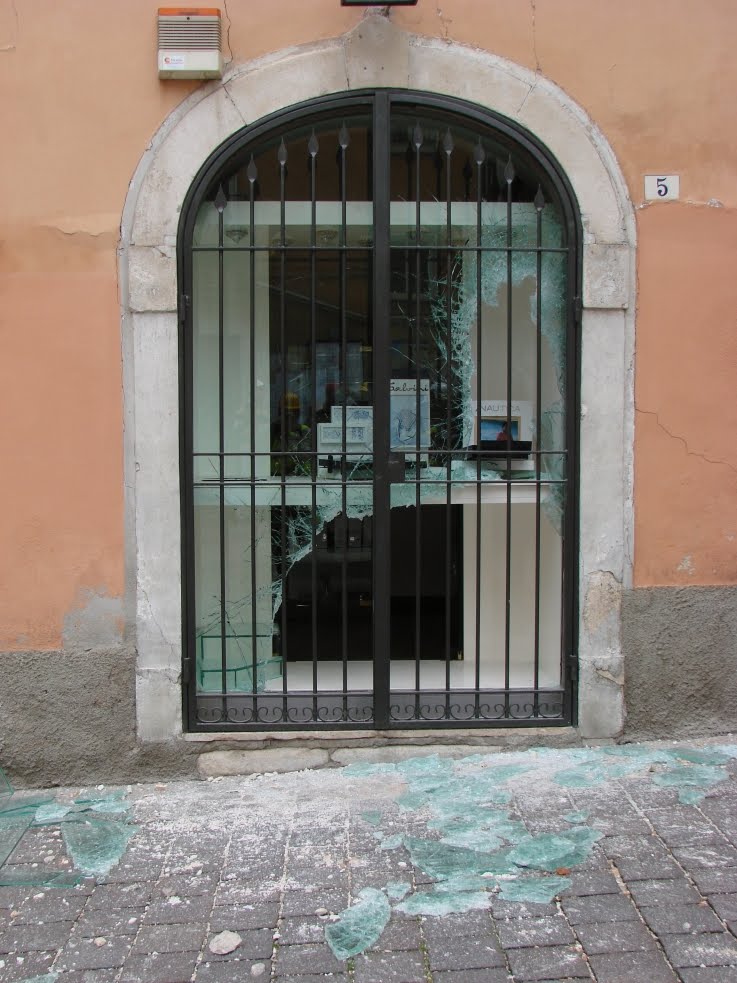
Looting, the very public theft of private property, is probably the most contentious of the so-called 'myths' of disaster. It has been misidentified or greatly exaggerated in many emergency situations. Moreover, it is often hypothesised as part of scenarios in which, in reality, it is unlikely to be a significant factor. It is usually treated as symptomatic of anarchy, the destructive side of the human character and the degradation or spontaneous abandonment of social norms. But while looting is refreshingly absent from many disasters, or at least is scarcely important in comparison with positive behaviour, it remains a factor in some events and, after years of study, it still demands clarification.

In 1968 sociologists Henry Quarantelli and Russell Dynes recognised that there is a difference between the causes and patterns of looting in disasters and civil disturbances (Dynes and Quarantelli 1968). Over the following two years they elaborated models of looting with particular reference to situations in which it has been prevalent, most of which were riots and few of which were natural disasters (Quarantelli and Dynes 1968, 1970). Indeed, with regard to the latter, there probably have to be specific preconditions of instability in the social fabric for looting to be a factor at all. Thus, after the Armenia (Colombia) earthquake of 1999, residents looted food stores and supermarkets. This was both a protest at the inefficiency of the Colombian Government's relief effort and a move to satisfy a basic need for sustenance (Brancati 2007). It was not a set of random acts of vandalism. Moreover, it probably stemmed from pre-existing instabilities in society, such as lack of faith in the role of government as the true and responsive embodiment of the common will.

According to Quarantelli and Dynes (1968), looting in disasters tends to be stealthy (although it clearly was nothing of the kind in the Colombian city of Armenia). In civil disturbances it follows a more open and complex model. In this, the first stage is marked by attacks on symbols of authority and there then follows the mass redefinition of property rights. The looting that occurs after this is a collective, participatory action in which pillaging tends to be more important than acquisition of goods: property norms have been redefined.

Dynes and Quarantelli (1968) broadened their model into three stages, in which the first is largely symbolic, the second is systematic and organised and the third is a free-for-all. The middle stage involves co-operation between those elements of society who wish to profit from the anarchy by organising theft and those who are doing it for the thrill. In the third stage, plundering becomes an acceptable, if transient, social norm.

Interestingly, Quarantelli and Dynes found that there is no simple correlation between the level of poverty or disadvantage of a person is and his or her propensity to engage in looting. Research in the 1990s (Wortley 1998) even went so far as to suggest that looters tend to be relatively well educated and adept at communication. Moreover, other work (Grabosky 1996) found that there appears to be no discernable difference in the average profiles of people who do and do not take part in rioting and looting.

Research conducted in the 1990s by sociologists and criminologists came up with new models. Bohstedt (1994) disaggregated the context of riots into the physical situation, the tactical conditions, any pre-history of similar incidents, prevailing social relationships, the local culture of norms and expectations, the political context of previous conflict, and the structural distribution of political power.

As long ago as 1969, Zimbardo had proposed a theory of deindividuation, in which individual responsibility for one's actions disappears amid impulsive mass behaviour that is dominated by crowd dynamics. Self-control disappears with it. In his contribution, Forsyth (1990) added that arousal is an important condition for the emergence of deindividuation. Turner and Killian (1972) developed emergent norm theory, in which crowds adapt to changing circumstances and their members conform to the developing trend of mass behaviour. Deindividuation is characterised by uninhibited behaviour, but strategic interaction theory suggests that a person's payoffs depend on what other people do at the scene, which can change a person's estimate of the costs and benefits of participating (Miller 1999). Bohstedt (1994) considered imitative riots and saw them as a communication process which he termed 'chronic contagion'.

In all of this research there are several points to bear in mind. The first is that natural disasters and civil disturbances such as riots tend not to generate the same kinds and scales of looting--indeed, the former might not generate any at all, and what occurs tends to be overshadowed by, or even (paradoxically) linked to, Barton's (1970) 'therapeutic community'. The second is that theories of rioting and looting can be divided into those based on association and communication, and those that require dissociation of the participants and a greater level of spontaneity. The third point is that looting can be purposeful or aimless. In disasters and riots that are a response to specific grievances, the purposeful kind dominates: i.e., looters want to make a point to the authorities. Aimless looting bears out Bohstedt's (1994) observation that the circumstances and dynamics of riots are not linearly related. In synthesis, the likelihood, occurrence and severity of riots cannot, it seems, be predicted from levels of social deprivation (Forsyth 1990). Hence, it is not easy to apply sociological analysis to situations dominated by social tension.

Rioting and looting occurred widely throughout England in early August 2011. The official response was seen by the general (non-rioting) public to be inadequate and to have let a bad situation degenerate into the uncontrolled proliferation of violence and anarchy. Suddenly the underclass had shed their mantle of invisibility and were up in arms. In terms of emergency management, there may have been a failure to create adequate planning scenarios based on similar events in the past and in other places, notably in Paris in October and November 2005. Similar inadequacies can be seen in the response to the bombing and shooting spree carried out in Norway on 22 July 2011 by Anders Behring Breivik.

It is important not to overstate the effects of the English case. In the Detroit race riots of 1967, some 2,700 shops were looted (Quarantelli and Dynes 1968), far more than in England in 2011. However, the images and accounts of immoral and criminal behaviour in the latter case were striking. Moreover, the dilemmas of crowd control were all too apparent in the operational shortcomings of the forces of order. Nonetheless, much ill-informed comment appeared, especially in foreign news media which did not take the trouble to read detailed accounts of the riots and thus tended to attribute them to deteriorated race relations. In reality they are a clear artefact of unfettered robber capitalism in which any form of social contract has been replaced with commercial profiteering that does much to increase the gap in wealth and opportunities from successful people and those at the bottom of the social pyramid. Small wonder that the latter rebel.

My last point is my most important one. What can be learned for disaster studies from the English looting spree is clearly rather limited, as circumstances obviously differ. However, the social study of disaster has been predicated for decades on the assumption, indeed the affirmation, of the therapeutic community--at least as it exists in the heat of the moment. Models based on the breakdown of society have been labelled as "Hollywood myths" (Mitchell et al. 2000). Whereas the English social fabric is emphatically not going to break down as a result of the August 2011 riots, it is as well to remember that society has its darker side. The moral consensus generated by floods and earthquakes, for example, is not necessarily as deep as social scientists have tended to assume. The answer for students of disaster is to pay more attention to the context of events.

References

Barton, A.H. 1970. Communities in Disaster: A Sociological Analysis of Collective Stress Situations. Doubleday, New York, 368 pp.

Bohstedt, J. 1994. The dynamics of riots: escalation and diffusion/contagion. In M. Potegal and J.F. Knutson (eds) The Dynamics of Aggression: Biological and Social Processes in Dyads and Groups. Lawrence Earlbaum Associates, Hillsdale, New Jersey: 257-303.

Brancati, D. 2007. Political aftershocks: the impact of earthquakes on intrastate conflict. Journal of Conflict Resolution 51(5): 715-743.

Dynes, R.R. and E.L. Quarantelli 1968. What looting in civil disturbances really means. Trans-Action 5: 9-14.

Forsyth, D.R. 1990. Group Dynamics (2nd edn). Brooks-Cole, Pacific Grove, California.

Grabosky, P. 1996. Unintended consequences of crime prevention. Crime Prevention Studies 5: 25-56.

Miller, R.A. 1999. Regime type, strategic interaction, and the diversionary use of force. Journal of Conflict Resolution 43(3): 388-402.

Mitchell, J.T., D.S.K. Thomas, A.A. Hill and S.L. Cutter 2000. Catastrophe in reel life versus real life: perpetuating disaster myth through Hollywood films. International Journal of Mass Emergencies and Disasters 18(3): 383-402.

Quarantelli, E.L. and R.R. Dynes 1968. Looting in civil disorders: an index of social change. American Behavioral Scientist 5: 131-141.

Quarantelli, E.L. and R.R. Dynes 1970. Property norms and looting: their patterns in community crises. Phylon 31(2): 168-182.

Wortley, R. 1998. A two-stage model of situational crime prevention. Studies on Crime and Crime Prevention 7: 173-188.

Zimbardo, P.G. 1969. The human choice: individuation, reason, and order versus deindividuation, impulse, and chaos. In W.J. Arnold and D. Levine (eds) Nebraska Symposium on Motivation, Vol. 17. University of Nebraska Press, Lincoln, Nebraska.