Sunday, 25 February 2018

Black-Sky Thinking


 Network of Stoppages - Marcel Duchamp, 1914


"For a moment they saw the nations of the dead, and, before they joined them, scraps of the untainted sky." - E.M. Forster, 1909


In the current furore about artificial intelligence (AI), there is a growing fear that machines will take on a life of their own and behave in a malign and uncontrollable manner (e.g. Observer 2016). There are many worrying aspects of AI, and some heartening ones, but there is a remarkably simple answer to talk of machines taking over, namely, why not pull out the plug? The insurgency of self-controlled machines is a staple of science fiction, and much of the respect for that genre stems from the fact that it often contains a metaphor for humanity's current mores and preoccupations. In this case, it is an indication of the extent to which we all take electricity for granted.

More than ever before in history, electricity is now our life-blood, and every day that passes this becomes more and more true. If anything threatens our survival, it is the absence of electrical current in the distribution system of high- and low-tension cables and wires. In fact, when NATO bombed Serbia in 1999 tacticians put a great deal of effort into bombing power stations with graphite (which short-circuits them) in order to render them inoperable and thus undermine the functioning of the enemy state.

Power failure is taken very seriously by utility providers and hospitals, but not by the general public or many businesses. For many decades we have been habituated to the idea that, if the power ever goes off, it will come on again very soon, and interruptions of service will be rare. They are a nuisance that forces us to suspend our activities, but that is all. This is a testimony to the dogged work of the electricity providers in ensuring supplies. It sets countries aside from those where, through lack of energy resources, inability to maintain networks, shortage of investment and growing demand, electricity distribution is not so stable. It sets us aside from the forgotten corners of the world where power grids and distribution networks have not yet arrived. They are either treated as romantic anachronisms or marginal places of little consequence. But what if electricity distribution did significantly fail? Both the causes and the consequences are likely to be quite involved (Luke 2010).

Much work has been carried out to protect electricity generation and distribution networks against progressive failures of the 'toppling dominoes' kind, characterised by a chain of protective isolations and shut-downs of the system (Terzija et al. 2011, Nateghi et al. 2016). However, with rising demand for electricity and diversifying supply, power distribution has become progressively more sophisticated, pervasive and internationalised. This has also created many more areas of potential vulnerability (Elizondo et al. 2002). Hence, 'cascading failure' is a term that is now less applicable to the physical relationships in a power network and more to the relationship between overall failure and chains of consequences (Chang et al. 2007, Bompard et al. 2009, Chiaradonna et al. 2011).

Despite all the work that has gone into making power generation and distribution resilient processes, natural hazard impact cannot be ruled out, and neither can technical failure (Maliszewski and Perrings 2011). Moreover, cyber attack cannot be regarded as a threat that is totally under control and will remain so (Stefanini and Masera 2008m Piccinelli et al. 2017). In this sense, the 2015-16 cyber attacks on the Ukrainian power grid have acted as a wake-up call to the electricity industry (Lee et al. 2016). In the last analysis, power supply will never be completely safe against widespread failure.

Because water supply and sanitation, fuel supply, food distribution and other services depend on the availability of electricity, there are grounds for regarding it as the primary form of critical infrastructure (Kröger 2008). It also provides some essential mechanisms through which critical infrastructure failure is linked to cascading disasters. In most places, the degree of dependency of society on electricity has not been tested by a prolonged, widespread outage (although around the world major events of this kind occur with a frequency of about once a year, and less consequential events orders of magnitude more often - Atputharajah and Saha 2009).

At present, we have a poor understanding of the degree to which we depend on electricity. Consider the impact of prolonged loss of power on food conservation and distribution. If motor fuel supplies cannot be pumped, food will rot in warehouses. If refrigeration fails, food will rot in situ. This may lead to a proliferation of gastro-enteritic diseases, as contaminated food is eaten, for example in the home environment, and it would certainly lead to a problem of how to dispose of large quantities and varieties of contaminated food. Hence, an extra burden on hospitals and a problem of rectifying the food supply chain would be consequences.

From advertising to sales and dispatch, commerce is now heavily, almost universally, dependent on electronic systems. Hence, interruption of electricity supply inevitably means interruption of business: the supplier cannot sell and the customer cannot buy. In such a situation, it will be interesting to see what degree of cushioning there is between interruption of service and bankruptcy. This came close to being tested in both "9-11" and the eruption of Eyjafjallajökull in 2010, each of which put a groundstop of about a week upon the airlines, leading to massive losses of revenue (Alexander 2013a).

How would a "cashless society" manage in the absence of electronic banking and electrically driven transactions? This problem covers a wide spectrum because it stretches from simple issues about paying for essential goods, such as food, to complex ones about major time-dependent electronic transactions, such as house purchase conveyancing.

One of the most significant and least explored elements of dependency upon electricity is the psychological side. For people who are completely habituated to communicating via social media and telephone, what would it mean to have to do without these devices (Wang et al. 2015)? This brings us to Barton's post-disaster 'therapeutic community' (Barton 1970). It is probable that a prolonged black-out would lead to more cooperation, social identification and self-sacrifice. It would tend to bring outcasts into the social circle rather than reinforce their exclusion. However, the other side of the coin is crime and social deviance. Despite the prevalence of the 'therapeutic community' and its reinforced consensus on what is right and proper, for criminals disaster is an opportunity (Zahran et al. 2009). Looting (Alexander 2013b) is not an inevitable consequence, but where appropriate preconditions exist (for example in deprivation, lawlessness or lack of social justice), it may be a significant outcome. The connection between electricity supply failure and looting has been well researched in its North American context (Muhlin et al. 1981, Wohlenberg 1982). However, before plans are laid to cope with a massive onset of looting as the lights go out, perhaps attention should be devoted to the presence or absence of preconditions and what they signify in terms of propensity or its absence.

If we became completely habituated to using digital technology, would we be able to think and act effectively in its absence? Information technology has caused people to retreat from reality, and at the same time it has made itself indispensable. If this seems to be too extreme an interpretation, an alternative view is that information technology has redefined reality. However, technological failure could redefine it again.

The Internet age has given a special sort of prescience to the renowned science fiction story that E.M. Forster wrote in 1909, The Machine Stops (Forster 1928). This is an apocalyptic tale of how universal dependency on technology leads to the breakdown of civilisation and the annihilation of all those who depend on it, except for a small group of people who have managed to break away and revert to a more natural form of living. Forster and his contemporaries faced the incubus of the First World War, in which the machine gun and poison gas did so much to show the prowess of technology on the killing fields. Yet it was not until the beginning of the nuclear age that people and their prophets began to see technology as genuinely capable of making an end to civilisation. Nonetheless, Forster's magisterial tale at least offers his readers a glimpse of future regeneration. Whether or not Forster was foreseeing something in the future, Domesday scenarios and the means of coping with them remain extremely difficult to think through (Bostrom and Cirkovic 2011, Denkenberger et al. 2017).

Forster's story relies much on automation, which is in turn dependent on the algorithms that make it function. The proliferation of algorithms is becoming a major influence upon modern life. All algorithms are models, and all models simplify reality. Good models are elegant simplifications and successfully extract the 'signal' from the 'noise' that surrounds it. However, the simplification process involves making assumptions, which in the end may be valid or false. By their very nature, as part of the modelling process, assumptions exclude information, observations and elements of reality. When algorithms fail, reality surges back, with all of its awkward complications and chaotic implications.

At present, we are not devoting enough attention to the question of how digital development creates vulnerability and dependency. Dependency, in fact, is the motor of vulnerability. All technology is ultimately fallible, but how vulnerable are we to its failure? The present tendency is to counter this fallibility with the application of yet more technology. Nothing could be more conducive to breeding the conditions for cascading failure. Will artificial intelligence and information technology failure create tragedy? If not, will it contribute to, exacerbate or multiply tragedies?

Technology has reorientated person-to-person communication. It has opened up new avenues, both good and bad, for leadership and for the management of public opinion. The spontaneous loss of the technology, for example in any form of prolonged failure of the equipment, will inevitably lead to resocialisation, but largely through a highly inefficient process of improvisation, of trial and error. Paradoxically, by creating massive redundancy, its very inefficiency may be the source of its richness and success. In the end if failure occurs on a grand scale (Pescaroli et al. 2018), afterwards, the attitude to technology will never be the same again.

References

Alexander, D.E. 2013a. Volcanic ash in the atmosphere and risks for civil aviation: a study in European crisis management. International Journal of Disaster Risk Science 4(1): 9-19.

Alexander, D.E. 2013b. Looting. Encyclopaedia of Crisis Management. In K.B. Penuel, M. Statler and R. Hagen (eds) Encyclopedia of Crisis Management, Vol. 2. Sage, Thousand Oaks, California: 575-578.

Atputharajah, A. and T.K. Saha 2009. Power system blackouts: literature review. International Conference on Industrial and Information Systems, December 2009, Sri Lanka: 460-465.

Barton, A.H. 1970. Communities in Disaster: A Sociological Analysis of Collective Stress Situations. Doubleday, New York, 368 pp.

Bompard, E., R. Napoli and Fei Xue 2009. Analysis of structural vulnerabilities in power transmission grids. International Journal of Critical Infrastructure Protection 2(1): 5-12

Bostrom, N. and M.M. Cirkovic (eds) 2011. Global Catastrophic Risks. Oxford University
Press, Oxford, 560 pp.

Chang, S.E., T.L. McDaniels, J. Mikawoz, K. Peterson 2007. Infrastructure failure interdependencies in extreme events: power outage consequences in the 1998 ice storm. Natural Hazards 41(2): 337-358.

Chiaradonna, S., F. Di Giandomenico and P. Lollini 2011. Definition, implementation and application of a model-based framework for analyzing interdependencies in electric power systems. International Journal of Critical Infrastructure Protection 4(1): 24-40

Denkenberger, D.C., D.D. Cole, M. Abdelkhaliq, M. Griswold and J.M. Pearce 2017. Feeding everyone if the sun is obscured and industry is disabled. International Journal of Disaster Risk Reduction 21: 284-290.

Elizondo, D.C., J. de La Ree, A.G. Phadke and S. Horowitz 2002. Hidden failures in protection systems and their impact on wide-area disturbances. IEEE Power Engineering Society Winter 2001 Conference, Proceedings, Columbus, Ohio: 710-714.

Forster, E.M. 1928. The machine stops (1909). In The Eternal Moment and Other Stories. Sidgwick and Jackson, London, 185 pp.

Kröger, W. 2008. Critical infrastructures at risk: a need for a new conceptual approach and extended analytical tools. Reliability Engineering and System Safety 93(12): 1781-1787.

Lee, R.M., M.J. Assante and T. Conway 2016. Analysis of the Cyber Attack on the Ukrainian Power Grid. SANS Industrial Control Systems, Electricity Information Sharing and Analysis Centre, Washington, DC, 23 pp.

Luke, T.W. 2010. Power loss or blackout: the electricity network collapse of August 2003 in North America. In S. Graham (ed.) Disrupted Cities: When Infrastructure Fails. Routledge, New York: 55-68.

Maliszewski, P.J. and C. Perrings 2011. Factors in the resilience of electrical power distribution infrastructures. Applied Geography 32(2): 668-679.

Muhlin, G.L., P. Cohen, E.L. Struening, L.E. Genevie, S.R. Kaplan and H.B. Peck 1981. Behavioral epidemiology and social area analysis: the study of blackout looting. Evaluation and Program Planning 4(1): 35-42.

Nateghi, R., S.D. Guikema, Y. Wu and C.B. Bruss 2016. Critical assessment of the foundations of power transmission and distribution reliability metrics and standards. Risk Analysis 36(1): 4-15.

Observer 2016. Artificial intelligence: ‘We’re like children playing with a bomb’ The Observer 12 June 2016.
https://www.theguardian.com/technology/2016/jun/12/nick-bostrom-artificial-intelligence-machine


Pescaroli, G., R.T. Wicks, G. Giacomello and D.E. Alexander 2018. Increasing resilience to cascading events: the M.OR.D.OR. scenario. Safety Science, 10 pp.

Piccinelli, R., G. Sansavini, R. Lucchetti and E. Zio 2017. A general framework for the assessment of power system vulnerability to malicious attacks. Risk Analysis 37(11): 2182-2190.

Stefanini, A. and M. Masera 2008. The security of power systems and the role of information and communication technologies: lessons from the recent blackouts. International Journal of Critical Infrastructures 4(1-2): 32-45.

Terzija, V., G. Valverde, D. Cai, P. Regulski, V. Madani, J. Fitch, S. Skok, M.M. Begovic and A. Phadke 2011. Wide-area monitoring, protection, and control of future electric power networks. Proceedings of the IEEE 99(1): 80-93.

Wang, C., M.K.O.Lee and Z. Hua 2015. A theory of social media dependence: evidence from microblog users. Decision Support Systems 69: 40-49.

Wohlenberg, E.H. 1982. The “geography of civility” revisited: New York blackout looting, 1977. Economic Geography 58(1): 29-44.

Zahran, S., T. O’Connor Shelley, L. Peek and S.D. Brody 2009. Natural disasters and social order: modelling crime outcomes in Florida. International Journal of Mass Emergencies and Disasters 27(1): 26-52.

Saturday, 24 February 2018

Finger Lickin' Research

[Apparently from www.head-fi.org]

I would now like to offer my readers a 'so what?' moment. How banal and stereotypical it is to jump out of the bath and run down the corridor ululating εὕρηκα! Now, you will be able to slither across the wet tiles shouting "so what?" I am presuming, of course, that you are reading this in the bath, which may prove fatal if the electronic device on which you are reading it is plugged into the mains and inadvertently makes contact with the bathwater.

Few US states are commonwealths: Massachusetts and Pennsylvania, of course, but also Kentucky. On its leading citizens, the Commonwealth of Kentucky bestows the title of 'colonel' in honoris causa. And so, thanks to large quantities of fried chicken and a fortuitous friendship with the Governor, we arrive at Harland D. Sanders (1890-1980), a 'Kentucky Colonel', who all but invented franchising. He started that process when the opening of Interstate 75 left his roadside restaurant and gas station bereft of customers. All he was left with was his savings and £105 a month from Social Security. In 1964, after 14 years of travelling around to open new outlets, Sanders sold most of the franchising rights. He remained as an 'ambassador' for the brand, which meant that he was constantly visiting KFC restaurants. If he did not like the cooking, with many expletives, he would dump the food upside down on the floor. The problem was that the new owners of the KFC franchise had cheapened the recipe. Sanders went on record to say that they had turned his great culinary invention into wallpaper paste, and he explained that observation in some detail.

What is there to learn from this? On the one hand, this information can be used to indulge in the luxury of a full-blooded 'so what?' moment. Alternatively, things are often not what they seem: First of all, Sanders was from Indiana, not Kentucky. Secondly, he had standards that were definitely higher than those his business eventually perpetuated. Thirdly, he knew all about wallpaper paste. Hence, that which is obvious may also be wrong. Sometimes, conventional wisdom can be mere foolishness, or laziness. Thirdly, things rarely turn out as expected. Who would have predicted that Sanders would become more of an icon in Beijing than Mao? Yet it is so. But not Sanders the man, Sanders the icon, the abstraction. Sometimes the figuration, or abstraction, of reality is more real than reality itself. So take it or leave it. But if you leave it, take nothing on trust, look beneath the surface, verify rather than assume, do not be ruled by your prejudices, strive to understand objective reality.

I thank Wikipedia for most of the factual information. Fast knowledge about fast food.

References

https://en.wikipedia.org/wiki/Colonel_Sanders

Evans, S. 2016. The face you can't avoid in China. BBC News, 13 January 2016
http://www.bbc.co.uk/news/magazine-35280026


Wednesday, 14 February 2018

Publish, Perish and Be Damned!

Academic publication has its elephant traps.

Publication is the end product of our research and one of the core activities of scholars and scientists everywhere. As the editor of major journals, I have been on the receiving end of the publication process for 32 years. During that period it has been abundantly clear that academic publication is a much misunderstood process. It has changed dramatically since I started editing in 1985, but, despite the constant metamorphosis, it is as misunderstood now as it was then.

When we write up our research we are endeavouring to communicate it. The first stage is to communicate with ourselves as we put our thoughts down on paper–or more likely the electronic equivalent. In this internal conversation, have we said what we meant and are we happy with our own expression? The second and more important stage is to communicate with readers, starting with the editor of the journal and the referees that he or she selects. Do they understand what is written? The third and final stage is to communicate with the research community at large. On this, one's reputation depends more than on many other activities and accomplishments.

Editors vary in their approach to a manuscript. Some are, in effect, referees, while others delegate much of the evaluation process to scholars or scientists that they have contacted, who are intended to be independent, impartial judges of the 'publishability' of the work. Referees vary from the meticulous to the sloppy, the appreciative to the scornful, helpful to obstructive. By and large, if there is a flaw in the paper, they will probably see it and take note.

In 1980 I sent an article to Environmental Management, a journal published by Springer in New York. It was one of my first writings and I was casting around for a suitable home. Environmental Management was the most attractive, professional looking journal on the shelf (bear in mind that we did not have digital resources then). Springer published it with clockwork efficiency and meticulous attention to detail, as I was to find when, five years later, I began a 17-year stint as its Editor-in-Chief. I mention this little episode, almost four decades ago, to illustrate the importance of appearance, professionalism and rigour. We all may feel that substance is more important that style, but in reality how things look has a very significant influence on how they are judged.

Last year, I received 1,061 manuscripts to edit. It is amazing how many of them were sloppily prepared. It was not altogether uncommon to find errors of English grammar or usage in the title of the work, the first thing that an editor or referee sees. It is even more common to find them in the abstract, along with that most elementary of mistakes: an abstract that is an introduction to the work rather than a precis of it. Most of the time, referees do their work reluctantly. It is another chore that we take on for love of the academic life and a sense of responsibility towards science, scholarship and the academic community. Rarely, we may actually want to read the manuscript and see what the author has to say. But referees do not want to review bad manuscripts. A poor quality title, a sloppy abstract, and the referee makes the decision not to bother. The editor has perhaps sent out a request for reviews under the premise that although the paper starts badly, there is probably a useful research message concealed in it somewhere. How few reviewers are willing to search for it! And yet the author needs to get the message, loud and clear, that the paper is not up to scratch.

Some authors vaunt their command of word-processing software by sending in a manuscript that is designed to look as if it is already published in the journal, even down to having the right masthead. Presumably they think that this will increase the paper's chances of being accepted. In reality it merely creates problems. It is very difficult to comment in detail on a double-column manuscript, and usually the smallness of the type font makes the paper difficult to read. Even if the paper is deemed acceptable, the copy-editor and typesetter would have to unpick the elaborate formatting, as they use a different form of software, thus adding to their workload.

Although it is strictly against the rules to submit a paper to more than one journal at once, authors routinely hawk their papers around from one serial title to another. Rejection by one provokes submission to another. This is apparent to the editor when it is clear that the formatting used is that of another journal - or another discipline. One could argue that on first review it does not matter very much, as nowadays almost all papers have to be revised before they are published, and this is an opportunity to put the formatting right. That is true up to a point, but when the format of the paper is widely divergent from that of the journal it does tend to imply that the author is not particularly committed to publishing in that particular venue. And why should the editor and reviewers be committed to giving the paper the green light?

The US Geological Survey have a strict policy that articles by their employees cannot be submitted for publication until they have been signed off by the USGS editorial office. As a result, the papers invariably demonstrate a level of professionalism in both the appearance and the content that others would do well to emulate. When you ready your article to go to a journal, double-space all of it, make sure there are page numbers and add line numbers (I prefer consecutive numbering of every fifth line - unobtrusive but effective). Failure to add the numbers is so common that I, as an editor, have a stock phrase ready: "Commenting in detail on this paper is hampered by the absence of page and line numbers." I also have stock phrases for the common errors of English, and I very often have to use them. Make sure that headings, sub-headings and referencing are consistent. It is a small matter but it makes a great deal of difference to the reader. Irritating a reviewer is not likely to get you a sympathetic review!

Obviously, the most important issue for submitting a manuscript is the quality of the science and scholarship that it embodies. The sections should be well-thought-out and should follow on in a logical stream. The arguments should be watertight. The literature should be competently reviewed. The paper should be well-focussed, without digressions, extraneous material or superfluous argument. For instance, when submitting to a journal based in a particular field, there is no need to write a general introduction to the field, as readers are bound to know the basics. Finally, the paper should have breadth of appeal. Most field or laboratory work is pretty small-scale, but the value lies in connecting it to a wider reality, for that is how science advances.

Most of what I have written in this short essay is self-evident and should be obvious. However, it is constantly surprising how few academic authors follow these strictures. The process of transforming thoughts into readable prose and scientific argumentation that can be shared is evidently a very imprecise one. Yet I am convinced that a little more care and attention can mean the difference between an article that is sympathetically reviewed, and an author who is respected, and an article that is summarily rejected.

Monday, 5 February 2018

London and Earthquakes


Londoners leave the city in advance of a third earthquake in 1750, but it never happened.

Obviously, London is not a city one normally associates with earthquakes and seismic damage, but there is such a connection, and it is quite surprising.

There are tales of the effects of earthquakes upon London and its inhabitants in at least a dozen cases before the 20th century. Other accounts may be hidden and it is quite probable that other earthquakes were felt but not written about in surviving literature. A few events have occurred with epicentres that were likely to have been under London, but the majority come from the seismogenic areas of the United Kingdom: the Midlands and Lincolnshire, north Wales, Kent and the English Channel into France and the Netherlands.

In this brief and unscientific account, intensities are given in the roughly coincident part of the main, relatively modern, scales (MM, MSK, etc.) and, because of the low values, magnitudes are quoted in the by now redundant and somewhat inaccurate Richter scale, ML, or local magnitude.

An earthquake is known to have rocked London in December 1164, but no details are forthcoming. Another occurred on 13th or 20th February 1247 with possible seiching of the Thames. Still others occurred on 14th December 1269, 11th September 1275 and 4th January 1299. A more substantial seismic event took place on Wednesday, 21st May 1382 at about 2 p.m. It caused enough seiching on the Thames to capsize boats, and it significantly damaged old St Paul's Cathedral. The earthquake occurred while a Synod of the Church was being held in Blackfriars in order to discuss dissenters. The Archbishop of Canterbury, William Courtnay, was prescient and level headed enough to attribute it to natural causes, something that his successors in the church rarely did. Overall, the 1382 eatthquake caused effects in London to about intensity VI. A further earthquake struck London on 23rd April 1449, and one occurred in Croydon on 25th May 1551.

One of the most widely discussed historical earthquakes was that which occurred on Wednesday, 6th April 1580, at 6 p.m.. It had an estimated magnitude of 5.7-5.8, and an inferred hypocentral depth of 20-30 km. Its estimated recurrence interval was about 200 years. The epicentre was either in the English Channel or in France south of Calais. London fell at the western end of a band of intensity VII effects that extended across the Channel to Lille and beyond. It appears that this event caused seiching in the Thames, if not a minor tsunami, and it definitely resulted in localised flooding. Several chimneys collapsed in London, a pinnacle fell from Westminster Abbey, and damage was particularly significant in Shorditch. Two young people, Thomas Gray and Mabel Everite, were killed by falling stones at Christchurch, Newgate. The boy died instantly and the girl succumbed several days later. The 1580 earthquake may have come from a source akin to that which caused a magnitude 4.3 event (with a hypocentral depth of 5.3 km) under Folkstone in 2007.

A more northerly source of seismicity lies in the North Sea, and it delivered tremors to London on 24th December 1601. This brings to mind the largest recorded earthquake in the British Isles, the 1931 Dogger Bank tremors (magnitude 6.1), which was also felt in London.

Relatively large earthquakes are also generated in north Wales and the Irish Sea area. Those of 7th October 1690 (magnitude circa 5.2) and 9th November 1852 (magnitude estimated at 5.3), had epicentres at Caernarfon and were felt in London.

A smaller event occurred at noon on Thursday 6th February 1750, with a magnitude of about 2.6. It was followed a month later, on 8th March, by a magnitude 3.1 event, which was experienced at 5:30 a.m. The shaking for this was violent in London, and the epicentres for the two events were estimated to have been near Leadenhall Street and near Lambeth, respectively. A rumour was propagated that earthquakes would occur monthly, which led to a mass exodus from London (and gridlock on the roads) on 8th April 1750. Needless to say, there were no tremors. The Church of England attributed the 1750 earthquakes to God's displeasure at the publication of Memoirs of a Woman of Pleasure ("Fanny Hill", by John Cleland, 1748-9).

A peculiarly destructive earthquake occurred at 09:18 on Monday, 22nd April 1884, with an epicentre at Wivenhoe, Essex. It lasted 20 seconds, and had an estimated magnitude of 4.6 and a hypocentral depth of about 70 km. In the Colchester area this event destroyed one mediaeval church and severely damaged at least four others. It damaged 1,250 other buildings in the area. One building, which was in a precarious state, was said to have collapsed in east London.

Other, more recent earthquakes that were felt in London include the 22nd September 2002 event at Dudley, West Midlands (magnitude 4.7), the 2007 Folkstone event mentioned above, and the earthquake of Wednesday, 27th February 2008 at Market Rasen, Lincolnshire (magnitude 5.2).

The leading expert on UK earthquakes and British seismicity is Dr Roger Musson of the British Geological Survey. He has warned that London is overdue for a damaging seismic event. Such is our critical infrastructure, that next time the effects are likely to be more serious and more complex than they were in 1580 and 1750.

Select Bibliography

Davison C. 1924. A History of British Earthquakes. Cambridge University Press, Cambridge: 332-335.

Guardian 2010. London is overdue for a major earthquake, warns seismologist. The Guardian, 16 September 2010.

Musson, R.M.W. 2004. A critical history of British earthquakes. Annals of Geophysics 47(2/3): 597-609.

Musson, R.M.W. and P.W. Winter 1996. Seismic hazard maps for the U.K. Natural Hazards 14(2-3): 141-154.

Neilson, G., R.M.W. Musson and P.W. Burton 1984. The  “London” earthquake of 1580, April 6. Engineering Geology 20: 113-141.

Scott, R.F. 1977. The Essex earthquake of 1884. Earthquake Engineering and Structural Dynamics 5: 145-155.

Sunday, 15 October 2017

Why the Hazards Paradigm Remains Stronger Than the Vulnerability Approach

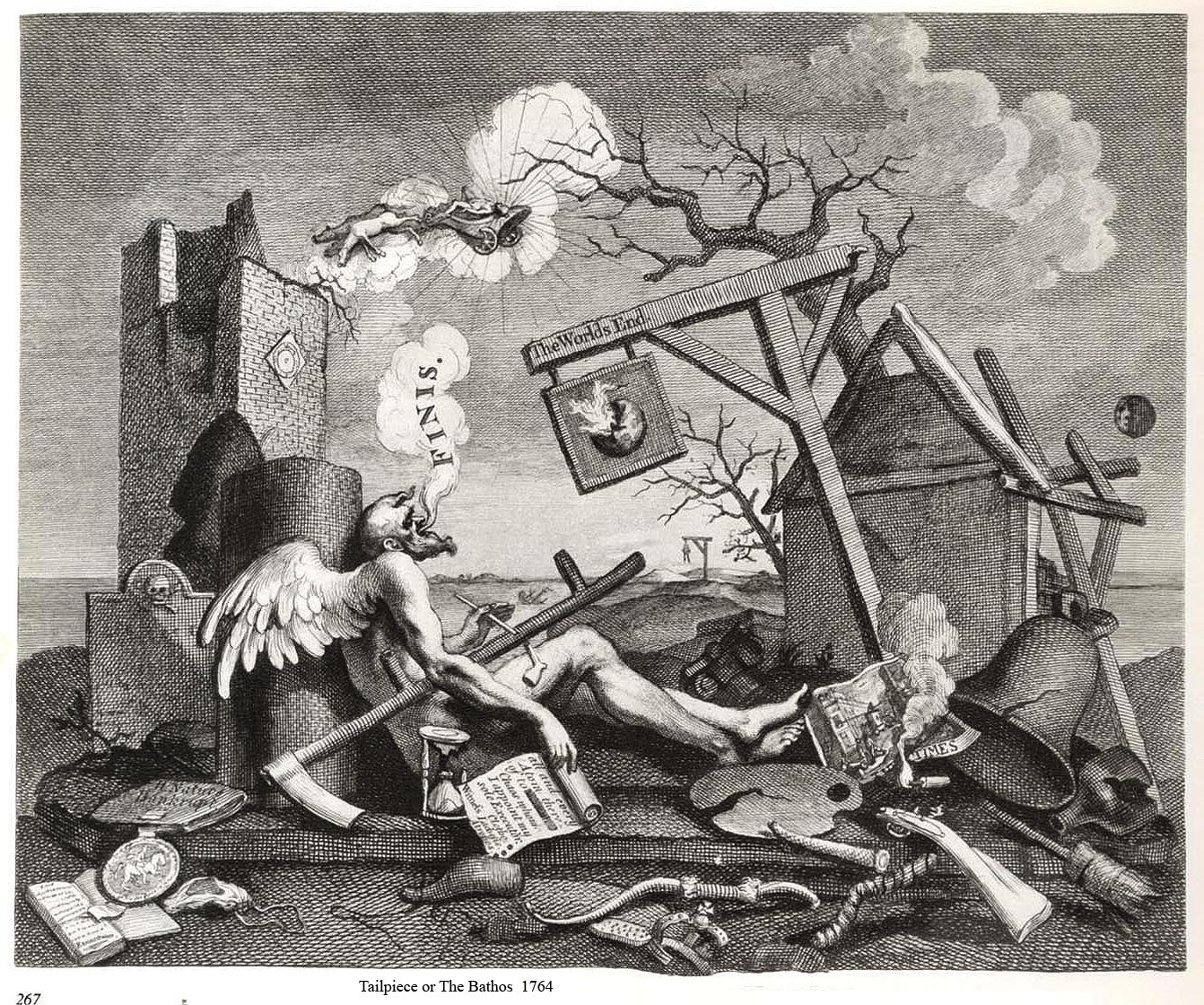
Image result for hogarth 
One of the great paradoxes of disaster studies is the dominance of the hazards paradigm over the vulnerability approach. In 1983, Kenneth Hewitt and his colleagues published Interpretations of Calamity (Hewitt 1983), which cogently set out the arguments for regarding hazard as the trigger of disaster and vulnerability as the essence of the phenomenon. More recent attention to the underlying risk drivers (Blaikie et al. 2003) and disaster risk creation (FORIN Project 2011) have reinforced that view. But what do we see? Hazards-based approaches continue to dominate the field. Indeed, they continue to strengthen their dominance. There are ten reasons why this is so, as follows.

1. It is easier to blame disasters on a neutral agent, such as an extreme natural event, than on human decision making. Having stated this, it is becoming less easy as the full force of human-induced climate change become more and more apparent.

2. People, including scientists, tend to shy away from root causes, which can be complex, agonising and therefore intimidating. Vulnerability as a root cause is often a particularly difficult phenomenon to get to grips with as it tends to be multi-faceted, complex and insidious.

3. Political decision making is a major root cause of vulnerability to disaster. It is all too often divorced from rational advice and wedded to ideology. In the face of political forms of 'rationality', it is hardly surprising that it seems more attractive to study natural phenomena than the vagaries of human behaviour.

4. For many decades there have been massive investments in 'hard' science and no corresponding levels of support for endeavours to understand vulnerability.

5. There is a widespread and enduring belief in the 'technofix' approach to disasters. The bigger the problem, the more technology is needed to fix it. This is, of course, an ideological position in its own right. As it seldom succeeds, but remains wildly popular (especially among those who make a living out of selling technology), the result is that worsening conditions engender yet more dependence on technological solutions, and vulnerability continues to rise.

6. In many parts of the world, libertarianism dominates over regulation. Yet the conditions that produce vulnerability need to be regulated if it is to be brought under control.

7. The position of the social sciences is subordinate to that of the physical sciences in the world's academic systems. There is still considerable prejudice in scientific quarters against the 'softness' of social sciences, which are regarded as lacking in rigour because they do often not produce concrete or precise results.

8. There is a particular view of magnitude and frequency that acts as a framework for responding to disaster. I refer to the physical magnitude and frequency of events, not the magnitude of vulnerability.

9. Physical development (such as urban development and the building trade) is a juggernaut that often crushes dissent and restraint. It has enormous political support and it creates vulnerability by putting more and more assets in harm's way.

10. Finally, vulnerability is a paradoxical phenomenon. Like friction, it only really exists when it is mobilised (by impact) and therefore it must be studied either hypothetically before it manifests itself or post hoc after it has been converted into damage. It is thus much less tangible than the physical forces of hazards that can be measured in the field.

Taken together, these ten observations go a long way to explaining why the disaster problem is such a long way from being solved and, indeed, why it continually gets worse. Of course, there is no guarantee that a better understanding of vulnerability would lead to better management of it, but it is nevertheless clear that more and more knowledge of physical hazards does less and less for the process of reducing disaster.

References

Blaikie, P., T. Cannon, I. Davis and B. Wisner 2003. At Risk: Natural Hazards, People's Vulnerability and Disasters (2nd edition). Routledge, London.

FORIN Project 2011. Forensic Investigations of Disasters. Integrated Research on Disaster Risk, Beijing, 29 pp.

Hewitt, K. (ed.) 1983. Interpretations of Calamity from the Viewpoint of Human Ecology. Unwin-Hyman, London: 304 pp.

Sunday, 1 October 2017

On Integrity


The spectacle of President Donald Trump endeavouring to belittle the mayor of San Juan, about aid to Puerto Rico after the devastation wrought by Hurricane Maria prompts me to a rather personal reflection about the breadth of people's attitudes. The argument over aid is a squalid one and it betokens a squalid outlook by the dominant opponent.

Many years ago I formed a close friendship with a man who was 30 years older than myself, whom I shall refer to by his title and first name, Don Rocco. He was a retired medical doctor, of considerable stature in his profession. During his career he founded a clinic for the treatment of tuberculosis and established a hospital in an area that at the time lacked the most basic medical amenities. Don Rocco was a modest man in everything except his concern for the safety and well-being of his people. I came to know him because he lived in a region that suffered badly from natural hazards and he was keen to encourage researchers to come and study there, and to provide some answers to the problem of disasters.

Don Rocco was a man of remarkable integrity. Others enriched themselves and gained status out of their work with the poor and needy, or their efforts against hazards: he did not. He would always listen to people's concerns and, wherever he could, he would try to help. Not all those around him were as admirable. He and I got on well and we would take daily walks and tell each other our secrets. On one occasion, I met him coming out of the hospital he had founded decades earlier. His expression was grim and I asked him what was up. He replied, "I feel like a father who has just learned that his daughter is a prostitute." I did not ask him what he had learned that day in the hospital but I did what I could to revive his spirits. As others succumbed to base instincts, his stature simply grew. People from places near and far admired and respected him. The more squalid the behaviour of others became, the more Don Rocco was admired. He won a presidential gold medal, but in his study the only item he showed off was a facsimile of the Magna Carta, which was for better or worse the symbol of his faith in democracy.

Don Rocco lived on into his nineties and was finally buried in the small cemetery of his home town, on the hill, at the bend in the road, overlooking the valley where once, a thousand years ago, the Saracens passed by on their way towards conquest. When he died, the hospital and the clinic were named after him. Outside the latter, there is a fairly lifelike statue of him, the man of faith and integrity, the man who always set an example but without showing the slightest pretence or ostentation. Don Rocco will live on in my heart until I too cease to exist. In the meantime, I must confess that it is very difficult to come to terms with the fact that there is now a public monument to my close friend. Such is the human condition.

Thursday, 31 August 2017

Climate Change and Cascading Disasters

Flooding in central Bangladesh. (photo: DA)

Once again, disasters are topical. As usual, why they are topical rather depends on what else is featuring in the news at the same time. Floods in the southern USA and South Asia throw into sharp relief the possibility that climate change may already be causing extreme events to be larger and more destructive. Perhaps in the images of destruction and inundation we have a graphic illustration of an outcome that needs to be shown to people for them to believe it. Experts prognosticating in front of television cameras are not enough to convince the sceptics about climate change (let alone the hard-line deniers): what is needed is a good, solid floodwave.

But let me introduce a new element: cascading disasters. In essence, a primary impact such as rising floodwaters leads to a series of knock-on effects. But it does not stop there. The interaction of different sources of vulnerability means that effects can be transformed into new causes.

In 2002 flooding on the Moldava or Vltava River severely inundated the city of Prague, but also impacted the Spolana chemical factory, causing an explosion and a toxic cloud. As I write, something similar is expected at the Arkema factory in Crosby, Texas, as a consequence of flooding caused by Tropical Storm Harvey. Primary and back-up systems for cooling volatile chemicals have failed. Explosive or combustive reactions are expected. What will be their consequences? Time will tell.

On the other side of the world in the Indian sub-continent, commuters are being prevented from getting to work and children are being deprived of schooling by flooding that is greater in magnitude and impact than its American counterpart. A building has collapsed in Mumbai, killing and trapping its occupants, leading to a relief effort that must be added to that mounted against the effects of the floods and intense rainfall.

It may be that all future disasters above a certain size will be cascading events to a greater or lesser extent. This is because both the degree of mutual dependency and the growing complexity of society make such an outcome inevitable.

So what can we do about cascading disasters? First, we must recognise that the game has changed. The idea of disaster as simple cause-and-effect must be abandoned. Planning based on this assumption is likely to lead to the wrong remedies, or at least to inefficiency, with respect to both disaster risk reduction and disaster response.

Secondly, in developing strategies, tactics, plans and procedures, we must place the emphasis squarely on understanding vulnerability in all its forms. Commonly it is broken down into categories: physical, environmental, social, psychological, institutional, and so on. However, it also includes elements such as the risks of dependency upon technology, corruption, failure to innovate, and social polarisation. This means that vulnerability is best viewed as a complex, multi-faceted phenomenon. We must understand its mechanisms and the interactions between the facets. As has been written many times, disaster is socially constructed. It is the result of decisions made by individuals or groups, for they are those who put people and their possessions in harm's way. The study of cascading disasters involves the search for escalation points, at which vulnerability becomes compound and creates new "disasters within disasters". Remember that the Japanese M9 earthquake of 11 March 2011 was not the real cause of the Tōhoku disaster: that was the resulting tsunami and its effect on the Fukushima Dai'ichi nuclear plant. This is now one of the largest examples of a cascading disaster.

Thirdly, we must investigate the 'disaster pathways', which are the directions in which impacts propagate, including the 'escalation points'. This will give us the basis for anticipating the effects of a primary agent of disaster and either reducing them a priori or intervening to limit the damage.

In the twentieth century the concept of 'disaster' was viewed very much as one based on static relationships. From 1950, empirical studies of equilibrium were fashionable, and if a system failed to achieve it, then 'homeostasis' could be invoked, or in other words the system was assumed to have a tendency to return from perturbations to its equilibrium, and thus to have a 'central tendency'.

The agenda has changed, and so should the outlook upon disasters. Physically, we have climate change; socially we have population growth and socio-economic polarisation of wealth and opportunity. We also have rapid changes in the global outlook coupled with increasing international interdependency. Seldom has vulnerability looked less stable.

The current floods in the USA and South Asia reveal the gaps and weaknesses in planning, with respect to both risk reduction and disaster response. Rather than cutting budgets and turning away from disaster risk reduction, decision makers need to devote far more resources to the problem--and, of course, to take cascading into account. This will require a shift from a 'technofix' approach that stems from hazard reduction to one based on vulnerability reduction. Many of us in the disaster studies community have been saying this for at least three and a half decades, vox clamantis in deserto. It is now, more than ever, economically and politically advantageous to listen to us.

Saturday, 5 August 2017

In Europe we're all going to die in disasters - or are we?


The top news on the BBC website this morning was that "deaths in Europe from extreme weather events could increase 50-fold by 2100". In my opinion, there are two lessons to be drawn from this.

The first is that the authors of the study (Forzieri et al. 2017) were very clever to release it at the time of maximum impact. As I write, the temperature outside my room is in the 40s Centigrade. The article was embargoed until 11.30 last night and pre-distributed to the mass media. Small wonder that today it got maximum exposure.

The second is that the research is pretty much worthless. It is misleading and highly unlikely to offer an accurate forecast. It is a hazards-driven study that effectively uses exposure as a surrogate for vulnerability, about which the authors have remarkably little to say (see my comments in Davis 2017). And yet it has been demonstrated all over the world that vulnerability defines death tolls - i.e., people can live in highly hazardous zones and not die if they are not vulnerable (Wisner 1993). Various African countries, India and Bangladesh have all had some notable successes in reducing disaster mortality in areas of high population growth (e.g. Paul et al. 2010). Moreover, one of the effects of the International Decade for Natural Disaster Reduction was to hold the line on death tolls (it would have been nicer if they had gone down, but anyway, it was an achievement of sorts).

By way of illustration, the current heat wave is probably going to be comparable to that of 2003, during which it is estimated that there were 70,000 excess and premature deaths (Lagadec 2004). The figure is highly contentious, but, leaving that aside, since then measures have been put in place to avoid a repetition (Boyson et al. 2014, Pascal et al. 2012). These are mainly early warning systems to detect and assist vulnerable people. In Tuscany, where I am writing this, they have been highly effective, and I believe they have in France and Spain, too.  In the United States, as population rose, heat-related mortality declined (Sheridan et al. 2009). In contrast, Forzieri et al. (2017, p. e206) forecast that heatwave deaths in southern Europe will go up by 7,000 per cent in a century. If that were so, perhaps our work in disaster risk reduction would be a waste of time.

People put faith in figures because they seem precise and scientific, even when the reasoning that supports the figures is a hollow shell. The good side of the article is that it draws attention to the problem - or to part of it (and what a pity it does not draw enough attention to the extreme dynamism of vulnerability!). The bad side is that policy may end up being based on projections that are largely fantasy. There may indeed be massive increases in mortality in weather disasters in Europe, but that would be a function of many other factors - whether there is conflict, the impact of cascades, the functionality of antibiotics, emerging threats and hazards, dependency on critical infrastructure, the status of emergency preparedness, exotic diseases, the wealth differential, etc...

References

Boyson, C., S. Taylor and L. Page 2014. The National Heatwave Plan: a brief evaluation of issues for frontline health staff. PLoS Currents Disasters 13 January 2014.

Davis, N. 2017. Extreme weather deaths in Europe 'could increase 50-fold by next century'. The Guardian 5 August 2017.
https://www.theguardian.com/science/2017/aug/04/extreme-weather-deaths-in-europe-could-increase-50-fold-by-next-century

Forzieri, G., A. Cescatti, F. Batista e Silva and L. Feyen 2017. Increasing risk over time of weather-related hazards to the European population: a data-driven prognostic study. Lancet Planetary Health.
http://www.thelancet.com/journals/lanplh/article/PIIS2542-5196(17)30082-7/fulltext

Lagadec, P. 2004. Understanding the French 2003 heat wave experience: beyond the heat, a multi-layered challenge. Journal of Contingencies and Crisis Management 12(4): 160-169.

Pascal, M.,  K. Laaidi, V. Wagner, A.B. Ung, S. Smaili, A. Fouillet. C. Caserio-Schönemann and P. Beaudeau 2012. How to use near real-time health indicators to support decision-making during a heatwave: the example of the French heatwave warning system. PLoS Currents Disasters 16 July 2012.

Paul, B.K., H. Rashid, M.S. Islam and L.M. Hunt 2010. Cyclone evacuation in Bangladesh: tropical cyclones Gorky (1991) vs. Sidr (2007). Environmental Hazards 9(1): 89-101.

Sheridan, S.C., A.J. Kalkstein and L.S. Kalkstein 2009. Trends in heat-related mortality in the United States, 1975-2004. Natural Hazards 50(1): 145-160.

Wisner, B. 1993. Disaster vulnerability: scale, power and daily life. GeoJournal 30(2): 127-140.

Tuesday, 1 August 2017

Seven Rules for the Application of Operations Research to Disaster Management


It is currently very fashionable to apply the methodologies of operations research to disaster mitigation, management and response. Is this a fashion or a fad? Will the algorithms be used and appreciated, or are they merely wasted effort? Do the algorithm makers understand what conditions are like in a disaster, and what the real needs of managers and responders are?

In disaster management there is a well-founded hostility towards over-sophisticated routines and equipment. Managing emergencies will always be a rough-and-ready process, in which most of what is done is a kind of approximation. Such is the nature of uncertainty and rapid change in the field that it could never be otherwise.

If operations research is to make a useful contribution to disaster management, it will have to take account of these principles:-

1.    In emergencies, 'optimisation' is a very relative term. Pre-planned activities require considerable scenario modelling in order to take account of the real needs that will be generated during a future emergency.

2.    Optimisation based on an assessment of pre-disaster conditions is unlikely to be relevant to the post-disaster situation. Infrastructure will be damaged, inefficient and probably partly non-functional.

3.    Optimisation that assumes perfect knowledge of the situation is bound to fail. During major emergencies, the common operating picture is constructed slowly and with difficulty. One cannot optimise a situation that is partially unknown.

4.    Algorithms that are designed to be used in emergency situations should be capable of deployment during emergencies. This means that at the height of a crisis time cannot be expended on collecting data or running lengthy analyses.

5.    To make an algorithm credible, evidence should be provided that it is acceptable to field commanders, who would use it or act upon the results that it provides. Optimisation is not an objective held by most emergency managers and field commanders. An algorithm that does not take account of their needs and ways of thinking is highly unlikely to be appreciated or utilised by them.

6.    Decision support systems are welcomed if they really do support decision making. No sensible emergency manager would put blind faith in an algorithm unless the results clearly demonstrate that it works and visibly improves the situation.

7.    Flexibility is an essential ingredient of any algorithm. In disasters, conditions on the ground can change abruptly and without warning. Algorithm makers need to understand the difference between 'agent-generated demands' and 'response-generated demands', as described in the classical literature on the sociology of disasters.